news
What to Listen to When Travelling to Croatia
When travelling, we often rely on playlists or podcasts to fill the silence between destinations. But what if your headphones could offer something more immersive, not just background noise, but a way into the soul of the place you’re in?
With the growing library of Croatian audiobooks in English and a selection of pure field recordings from the country's most striking natural settings, book&zvook, Croatia’s first digital audiobook platform, invites travellers to experience the country through its voices, its literature, and its soundscapes.
Whether you're strolling through stone alleys, stuck in ferry queues, or watching the horizon from a car window, here’s what to listen to while Croatia unfolds around you.
prose
Želimir Periš: The Bony-Legged Bride
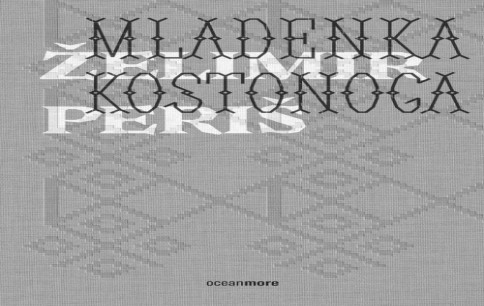
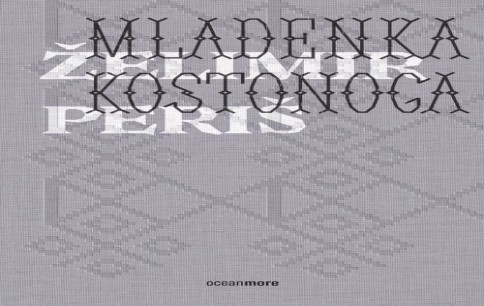
The Bony-Legged Bride accompanies the fate of the “witch” Gila, who practiced healing and herbalism in the 19th century. The novel traces her travels from Herzegovina through Dalmatia, Lika, Istria, and finally Imperial Austria, with a non-linear plot extending through a swathe of the 19th century. The book’s postmodernist collage plays with the contemporary understanding of the term “witch”. In the time the story is set, a woman who practiced healing in Croatian villages was called a healer, powerful mother, fairy woman or witch. The novel follows several medical “cases” that Gila solves, which often involve mental disorders or common existential challenges of her “patients”, rather than physical illnesses. The novel mystifies and demystifies the notion of witchcraft and the concept of writing a novel. The Bony-Legged Bride is structurally complex but nevertheless spirited. Its fifty-two chapters and six appendices weave a lively fabric of beliefs and superstitions, narratives and fables, in the rhythm of a decasyllabic Balkan folk song: comical, mocking, grotesque and melancholic.
panorama


So Long, Friend: Remembering Jonathan Bousfield
Sadly, our long-time collaborator and friend, Jonathan Bousfield, passed away this April, leaving behind an enormous hole in the local cultural scene.
Over the years we have liberally linked to various articles from Jon’s excellent blog, Stray Satellite, here on Critical Mass because quite simply there was nothing else like it. Stray Satellite is an impressive kaleidoscope of various topics mainly focused on Croatia and the greater Eastern Europe region, ranging from alternative and pop culture to music, history, travel, literary and film reviews, social movements, and more.
prose


Nora Verde: My Dowry
Nora Verde’s Moja dota (“My Dowry”) follows the story of a defiant little girl at the beginning of the 1980s. It is a story of a girl with a Prince Valiant-inspired haircut and yellow shorts travelling from Split to Vela Luka with a bag full of Martin Mystery comics to spend the summer every year with her beloved grandmother. The idyll of days passed with grandma, days filled with chores, songs and storytelling, is broken by the threatening presence of the girl’s uncle. With every passing year, the girl is burdened more and more by the feeling of not belonging to her working-class, hard-working family. Torn between city and island life, the standard language and the dialect, female and male gender expression, she finds her way to freedom and independence through education and writing. Subtly reminiscent of the works by Annie Ernaux and Édouard Louis, My Dowry tells a touching and painfully striking story about an adolescence overshadowed by class shame, anger and the exploration of sexual orientation; it enriches the existing literary corpus that focuses on growing up on the islands, and brings an indispensable class and gender perspective to it.
prose

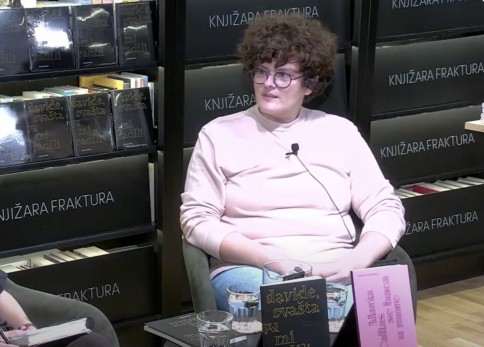
Marija Andrijašević: An Excerpt from The Land Without Twilight
Marija Andrijašević (1984) was born and raised in Split. She finished trade school in 2008 then obtained her Masters in Comparative Literature and Ethnology and Cultural Anthropology from the University of Zagreb, Faculty of Philosophy in 2015. She also completed a one year program at the Center for Women’s Studies in Zagreb in 2016. Her works include the poetry collection davide, svašta su mi radili (2007) (David, They Did All Sorts of Things to Me), which won the Goran Award for Young Poets, and her debut novel Zemlja bez sutona (2021) (The Land Without Twilight) which took home both the regional award Štefica Cvek and the prestigious tportal award for the best novel of the year.
prose

Lora Tomaš: An Excerpt from Salty Darkness
Lora Tomaš holds a bachelors degree in Indology and English Studies from the Faculty of Philosophy, University of Zagreb. She earned her masters degree in Gender Studies from Central European University. Tomaš co-edited and co-translated two anthologies of modern Indian short prose and poetry- Popodnevni pljuskovi: izbor iz indijskog ženskog pisanja (2011) (Afternoon Showers: a selection of Indian women's writing) and Lotosi od neona: indijski autori o gradovima i drugim ljubavima (2017) (Neon Lotuses: Indian authors on cities and other loves). An early version of her first novel, Slani mrak (2020) (Salty Darkness), was a finalist for the V.B.Z. award for the best unpublished novel of 2019 and later she added her short story Prozor s pogledom (A Window With a View), also a finalist for a European award, to the novel. Her debut novel Slani mrak (2020) (Salty Darkness) earned her the 2020 Slavic award given by the Society of Croatian Writers.
Tomaš lived in Southeast Asia for several years, working as a journalist and literary critic for local publications. She now lives in Zagreb and works as a literary translator and a language teacher.
Read an excerpt from Tomaš's novel, Salty Darkness, in the link below.
Translation by Mirna Čubranić.
poetry


Poetry from Ana Brnardić: The Other Sister
Ana Brnardić was born in 1980 in Zagreb. She holds a Master’s degree in the Croatian Language and Literature and Comparative Literature from the Faculty of Philosophy, University of Zagreb. She also earned a Master’s degree in Music, specifically for the violin, from the Music Academy in Zagreb. She has published five collections of poetry: Pisaljka nekog mudraca (1998) (Some Sage’s Pen), Valcer zmija (2005) (Waltzing Snakes), Postanak ptica (2009) (Genesis of Birds), Uzbrdo (2015) (Uphill) and Vuk i Breza (2019) (A Wolf and a Birch). Her poetry has been translated into fifteen languages and included in various anthologies, literary magazines and web portals. Brnardić has won several prestigious regional poetry awards for her work including the Goran’s Spring Award and the Slavić and Kvirin Award for Young Poets. She participates in various poetry festivals and online poetry platforms such as Versopolis, writes book reviews and also translates Romanian literature into Croatian. Brnardić lives and works in Zagreb.
Read Brnardić’s poem The Other Sister in the link below.
Translation by Chelsea Sanders.
prose


Karmela Špoljarić: Excerpt from Rashomon
Karmela Špoljarić was born in Zagreb in 1967. She earned her bachelor’s degree in Croatian Studies and Yugoslavian Philology from the University of Zagreb. She also holds a master’s degree in the Scientific Study of Literature from the University of Zagreb. She writes prose and theater scripts. She has published the teen drama Nula kuna po minuti (2011) (Zero kunas per minute), which won the Marin Držić award. Her novel Nije ovo Twin Peaks (2014) (This Isn’t Twin Peaks) won the DHK Slavić award. She has also published a collection of short stories Pazi što ćeš poželjeti (2013) (Be Careful What You Wish For), the novel Major Tom (2014) and the novel Rašomon (2019) (Rashomon). Her short stories have been published in various literary magazines. Another of Špoljarić’s passions is creating and running tailored creative writing workshops. She splits her time between Zagreb and the island of Krk.
As Dubravka Šćukanec writes in her review of the novel “The novel Rashomon is a bitter story about many of us, those of us who whine about the past, who ask ourselves at which station the train of life took a turn towards wastelands and bleakness, about those of us who seek causes and blame in other people and events which marked us with life’s misery.” (Šćukanec, Dubravka, 4.6.2021, GKR Magazin).
Read an excerpt from Špoljarić’s most recent novel Rashomon below.
Translation by Mirna Čubranić.
prose


Tomica Šćavina: Excerpt from A Room at the Bottom of the Sea
Tomica Šćavina was born in 1975 in Vodice. She holds a Psychology degree from the University of Zabreb. She has published two books which are compilations of her psychology columns: Unutarnji kompas (2009) (Internal Compass) and Koordinate sreće (2012) (Coordinates of Happiness). Her first novel Brod za Lajku (2011) (A Boat for Lajka) was shortlisted for the VBZ award for the best unpublished novel of the year. Her second novel, Povratak genija (2013) (The Return of Genius), won the SFera award for the best science fiction novel. Her most recent novel is Soba na dnu mora (2019) (A Room at the Bottom of the Sea). She has also published poetry in various regional literary magazines. In addition, Šćavina has written five documentary radio plays for Croatian Radio, which earned her a European Union award. Alongside her fiction writing and psychology columns, Šćavina has led numerous creative workshops and workshops dedicated to personal growth for children and adults.
Šćavina’s novel, A Room at the Bottom of the Sea, introduces us to Giana as she begins her new life as a cruise ship waitress, naïve to the dog-eat-dog conditions of her new workplace and haunted by her past of coming of age during the war in Croatia. Read a passage below.
Translation by Ellen Elias-Bursac.
prose


Nenad Stipanić: Excerpt from Neon Gods
Nenad Stipanić was born in Senj in 1973, but has spent most of his life in Zagreb. His short stories have been published in numerous reputable regional literary magazines as well as various anthologies. He has published several collections of short stories: Sprinteri u labirintu (2005) (Sprinters in a Labyrinth), Odlično je baviti se kriminalom (2008) (It’s Great to Be a Criminal). Stipanić has also published several novels including Izbacivači Majke Božje (2012) (The Mother of God Bouncers) and Stvarno je odlično baviti se kriminalom (2015) (It’s Really Great to Be a Criminal). He won the Ministry of Culture Prize for the Best Literary Achievement in 2012 with his novel The Mother of God Bouncers and his novel It’s Really Great to Be a Criminal received the Balkan Noir Prize for the Best Croatian Criminal Novel in 2015. His latest novel Bogovi neona (2019) (Neon Gods) was a finalist for the Croatian Tportal Literary Award as well as the European Union Literature Prize.
Stipanić has worked various jobs throughout his life including all types of manual labor, ticket sales, tourist guide, bouncer in Croatian clubs and abroad, bodyguard, the owner of an art gallery and used book store, scriptwriter etc. He now devotes most of his time to his literary career. He currently lives in Berlin.
Read a passage below from Stipanić’s latest novel, Neon Gods, which the legendary editor Kruno Lokotar described as “…one of the most radical experiments in Croatian literature and an attempt to introduce the genre of bizarre fiction with elements of bizzare freaktion into the local literary scene…” (Lokotar, Kruno, 2019.6, Moderna vremena, https://mvinfo.hr/knjiga/12892/bogovi-neona).
Translation by Vesna Marić.
prose

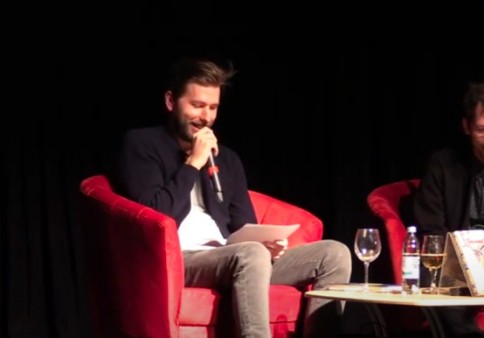
Ante Zlatko Stolica: Short stories from his book Close to Everything
Ante Zlatko Stolica was born (1985) and raised in Split. He holds degrees in Croatian Language and Literature and Philosophy. He has written several short documentaries, film scripts and a collection of short stories Blizina svega (2020) (Close to Everything). He is a co-screenwriter for the film Kratki izlet (2017) (A Short Excursion), which won the Zlatna arena award for the best film of the year.
Stolica’s eclectic stories deal mostly with the young protagonists’ ventures into the adult world of work and the string of dead-end jobs they are faced with, set in his hometown of Split.
Read some stories from Stolica’s book Close to Everything below.
Translation by Marta Huber.
panorama


Ivana Bodrožić's Novel Recognized in America
Ivana Bodrožić’s novel We Trade Our Night for Someone Else’s Day was recognized as one of the Best International Crime Novels of 2021 by the American cultural website CrimeReads.
prose


Valent Pavlić: Excerpt from Evanesco
Valent Pavlić was born in 1985. He grew up in Zagreb and graduated from the University of Zagreb with a degree in French Language and Literature and Art History. He has published two collections of short stories Evanesco (2016) and Prepreke. Prečaci. (2019) (Obstacles. Shortcuts).
Pavlić’s unique and unsettling tale about a man who embarks on chosen isolation from others will resonate even more for readers who have lived through two pandemic years.
Read an excerpt from Pavlić’s debut novel, Evanesco, below.
Translation by Mirna Čubranić.
news

French Translation of Jurica Pavčić's Red Water Wins French Award for Best Crime Novel
The French translation of Jurica Pavčić's Crvena Voda (Red Water) snagged the 2021 Grand Prix de Litterature Policiere, France's esteemed award for the best international crime novel.
Crvena Voda was translated into the French by Olivier Lannuzel.
review


Review of Ivana Bodrožić's Novel: We Trade Our Night For Someone Else's Day
Read a review of Ivana Bodrožić’s bombshell of a novel We Trade Our Night for Someone Else’s Day, translated by Ellen Elias-Bursać.
panorama
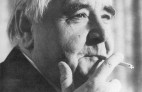
Krleža as Seen by French Critics
Six of Krleža's books have been translated into French: The Burial at Theresienburg (short stories, Editions de Minuit, translated by Antun Polanšćak, preface by Leon-Pierre Quint, Paris, 1956.), The Return of Philip Latinovicz (novel, edited by Calman-Lévy, translated by Mila Đorđević and Ciara Malraux, Paris, 1957.], The Banquet in Blithuania (novel, edited by Calman-Lévy, translated by Mauricette Beguitch, Paris, 1964.), I’m not Playing Anymore (novel, Edition de Seuil, translated by Janine Matillon, Paris, 1969.], Mars, Croatian God (short stories, Edition Calman-Lévy, translated by Janine Matillon and Antun Polanšćak, Paris, 1971.), The Ballads of Petritsa Kerempuh (Edition: Presses orientales de France, translated by Janine Matillon). All these books were well received. We give here some extracts from criticisms (Maurice Nadeau, Léon Pierre Quint, Claude Roy, Marcel Schneider, Robert Bréchon, Jean Bloch-Michel and others) who provide various insights into Krleža`s work.
The article was originally published in Most/The Bridge literary review (number 3-4, 1979).
prose

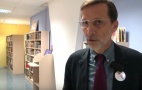
Miro Gavran: Excerpt from Kafka's Friend
Miro Gavran is a prolific Croatian playwright and novelist whose work is celebrated both at home and abroad. His plays and novels have been translated into 40 different languages, and his scripts have been used in over 300 plays worldwide. The eponymous festival Gavranfest, consisting of a week of exclusively Gavran’s plays, is held annually in Croatia, Slovakia, Poland and the Czech Republic.
Gavran was born in Gornja Trnava in 1961. He holds a degree in Theater from the Academy of Theater, Film and Television in Zagreb. In the early 1980s, he worked as a theater director for then prestigious Zagreb theater, Theater &TD. He has made his living exclusively as a writer and playwright since 1993. Gavran has penned more than forty plays as well as ten novels. He has won twenty awards in Croatia and abroad for his work, including the prestigious Central European Time Prize, which recognizes Central European authors for their entire opus. He is an associate member of the Croatian Academy of Sciences and Arts and is a member of the Russian Academy of Literature.
In his novel, Kafka’s friend, Gavran explores and speculates what one of history’s most famous friendships of equals and opposites must have been like: that of contemplative, reserved and brooding Franz Kafka and his more open friend, also a writer, Max Brod, who as the executor of Kafka’s estate, famously published Kafka’s work against his wishes.
Read an excerpt from Gavran’s novel, Kafka’s Friend, in the link below.
Translation by Nina H. Kay-Antoljak.
prose

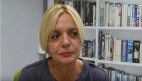
Marina Vujčić: Excerpt from The Anatomy Issue
Marina Vujčić, born in 1966 in Trogir, is a writer, columnist and editor. Vujčić holds a degree in Croatian Language and Literature from the University of Zagreb. She’s published Bijeg uz Brijeg (2002), Tuđi život (2010) (Someone Else’s Life), A onda je Božo krenuo ispočetka (2014) (And then Božo Started from the Beginning), Umri ženski (2014), Mogla sam to biti ja (2015) (It Could Have Been Me), Susjed (2015) (Neighbor), Otpusno pismo (2016) (Letter of Discharge), Pitanje anatomije (2017) (The Anatomy Issue). Her novel, Neighbor, won the VBZ and Tisak Media award for Best Unpublished Novel in 2015. She lives and works in Zagreb.
Vujčić’s novel begins with an unusual request: a widower places an ad in the paper looking for someone to scratch his back and his ad is cautiously answered by a woman looking to make some extra money. This is the starting point Vujčić uses to explore the boundaries of human relations in a post-modern urban society where people are increasingly alienated from one another, and many peoples’ lives and relationships are defined by a series of contractual agreements.
Read an excerpt from Vujčić’s novel, The Anatomy Issue, in the link below.
Translation by Mirna Čubranić.
prose


Tanja Mravak: Meat
Tanja Mravak, born in Split in 1974, holds a Bachelor’s degree in Education and a Master’s degree in Defectology. She works as a teacher in a Center for Autism in Split, is a regular columnist for the daily Croatian newspaper, Jutarnji List, and has written two collections of short stories to great acclaim. Her debut collection of short stories, Moramo razgovarati (2010) (We Have to Talk) won the prestigious Jutarnji list award for best fictional book of the year. She has most recently published a new collection of short stories Naša Žena (2017) (Our Woman).
Mravak’s stories often reveal the less glamorous side of her native Dalmatian culture, not found in the abundant tourist brochures and blogs devoted to the beauty of the historical towns that dot the Adriatic Sea. She often likes to probe what is beneath the surface of everyday interactions, what is left unspoken. Her short story Meat revolves around an unusual romance which will have you questioning even the most ordinary interactions between men and women and especially the roles women tend to be cast into.
Read Mravak’s short story, Meat, below.
Translation by Antonija Primorac.
panorama
Will Firth on Political Noir in Contemporary Montenegrin Novels
Several fascinating and socially critical novels by Montenegrin authors over the last decade give us a peek into Montenegro’s political underbelly, revealing its still precarious position between Eastern and Western spheres of influence.
poetry

Drago Glamuzina: Butchers
“Butchers” (Mesari), a collection of poems by Drago Glamuzina, won the Vladimir Nazor Book of the Year Award and the Kvirin Prize for the Best Book of Poetry in Croatia, and was translated into German, Macedonian and Slovene.
Glamuzina was born in Vrgorac in 1967. His publications include Mesari (Butchers, poetry, 2001), Tri (Three, a novel, 2008), Je li to sve (Is That All, poetry, 2009), Everest (poetry, 2016)...
“Love and jealousy through a clash of one body against another become the origins of speaking about life and the world in general. Glamuzina’s act of switching the idyllic love couple with a dramatic love triangle ignites the lyrical narration that spreads in different directions. (…) His “butchers” often cut at the most sensitive spots.” (K. Bagić)
panorama


Rebecca Duran's Take on Modern Day Life in Pazin (Istria)
Croatia is a small, charming country known today as a prime European tourist destination. However, it has a complicated often turbulent history and is seemingly always destined to be at the crossroads of empires, religions and worldviews, with its current identity and culture incorporating elements from its former Communist, Slavic, Austrian-Hungarian, Catholic, Mediterranean, and European traditions.
review


Review of Dubravka Ugrešić's Age of Skin
Dubravka Ugrešić is one of the most internationally recognizable writers from Croatia, but she has a contentious relationship with her home country, having gone into self-exile in the early 90s. Her recently translated collection of essays, The Age of Skin, touches on topics of of exile and displacement, among others. Read a review of Ugrešić’s latest work of non-fiction, expertly translated by Ellen Elias-Bursac, in the link below .
review


Review of Neva Lukić's Endless Endings
Read a review of Neva Lukić's collection of short stories, Endless Endings, recently translated into English, in World Literature Today.
panorama


A Guide to Zagreb's Street Art
Zagreb has its fair share of graffiti, often startling passersby when it pops up on say a crumbling fortress wall in the historical center of the city. Along with some well-known street murals are the legendary street artists themselves. Check out the article below for a definitive guide to Zagreb's best street art.
panorama


Beloved Croatian Children's Show Professor Balthazar Now Available in English on YouTube
The colorful, eclectic and much beloved Croatian children's cartoon Professor Balthazar was created by Zlatko Grgić and produced from the late 1960s through the 1970s. Now newer generations will be able to enjoy the Professor's magic, whether they speak Croatian or English.
panorama


An English Book on Croatian Football Legend Robert Prosinečki
Robert Prosinečki's long and fabled football career includes winning third place in the 1998 World Cup as part of the Croatian national team, stints in Real Madrid and FC Barcelona as well as managerial roles for the Croatian national team, Red Star Belgrade, the Azerbaijani national team and the Bosnian Hercegovinian national team.
panorama

Jonathan Bousfield on the Seedy Side of the Seaside
From strange tales of mysterious murders to suspected criminals hiding out to scams, duels and gambling, Opatija, a favourite seaside escape for Central Europeans at the turn of the last century, routinely filled Austrian headlines and the public's imagination in the early 20th century.
review


Review of new English translation of Grigor Vitez's AntonTon
Hailed as the father of 20th century Croatian children's literature, Grigor Vitez (1911-1966) is well known and loved in his homeland. With a new English translation of one of his classic tales AntonTon (AntunTun in Croatian), children around the world can now experience the author's delightful depiction of the strong-minded and silly AntonTon. The Grigor Vitez Award is an annual prize given to the best Croatian children's book of the year.
news


The Best of New Eastern European Literature
Have an overabundance of free time, thanks to the pandemic and lockdowns? Yearning to travel but unable to do so safely? Discover the rhythm of life and thought in multiple Eastern European countries through exciting new literature translated into English. From war-torn Ukraine to tales from Gulag inmates to the search for identity by Eastern Europeans driven away from their home countries because of the economic or political situations but still drawn back to their cultural hearths, this list offers many new worlds to explore.
panorama

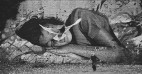
More Zagreb Street Art
Explore TimeOut's gallery of fascinating and at times thought-provoking art in the great open air gallery of the streets of Zagreb.
panorama


Welcome to Zagreb's Hangover Museum
Partied too hard last night? Drop by Zagreb's Hangover Museum to feel more normal. People share their craziest hangover stories and visitors can even try on beer goggles to experience how the world looks like through drunken eyes.
panorama


Jonathan Bousfield on the Future as Imagined in 1960s Socialist Yugoslavia
How will the futuristic world of 2060 look? How far will technology have advanced, and how will those advancements affect how we live our everyday lives? These are the questions the Zagreb-based magazine Globus asked in a series of articles in 1960, when conceptualizing what advancements society would make 40 years in the future, the then far-off year of 2000. The articles used fantastical predictions about the future to highlight the technological advancements already made by the then socialist Yugoslavia. Take a trip with guide, Jonathan Bousfield, back to the future as envisioned by journalists in 1960s Yugoslavia.
panorama


Untranslatable Croatian Phrases
What’s the best way for an open-minded foreigner to get straight to the heart of another culture and get a feel for what makes people tick? Don’t just sample the local food and drink and see the major sights, perk up your ears and listen. There’s nothing that gives away the local flavor of a culture more than the common phrases people use, especially ones that have no direct translation.
Check out a quirky list of untranslatable Croatian phrases from Croatian cultural guide extraordinaire, Andrea Pisac, in the link below:
panorama


Jonathon Bousfield on the Museum of Broken Relationships
Just got out of a serious relationship and don't know what to do with all those keepsakes and mementos of your former loved one? The very popular and probably most unique museum in Zagreb, the Museum of Broken Relationships, dedicated to preserving keepsakes alongside the diverse stories of relationships gone wrong, will gladly take them. Find out how the museum got started and take an in-depth look at some of its quirkiest pieces in the link below.
panorama


Cool Things To Do in Zagreb
Zagreb is Croatia’s relaxed, charming and pedestrian-friendly capital. Check out Time Out’s definitive Zagreb guide for a diverse set of options of what to explore in the city from unusual museums to legendary flea markets and everything in between.
panorama


Jonathan Bousfield on Diocletian's Legacy in Split
Diocletian’s Palace is the main attraction in Split, the heart and soul of the city. Because of the palace, Split’s city center can be described as a living museum and it draws in the thousands of tourists that visit the city annually. But how much do we really know about the palace’s namesake who built it, the last ruler of a receding empire? Jonathan Bousfield contends that history only gives us a partial answer.
interview
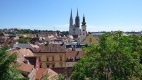

The Poetry of Zagreb
Cities have served as sources of inspiration, frustration, and discovery for millennia. The subject of sonnets, stories, plays, the power centers of entire cultures, hotbeds of innovation, and the cause of wars, cities are mainstays of the present and the future with millions more people flocking to them every year.
Let the poet, Zagreb native Tomica Bajsić, take you on a lyrical tour of the city. Walk the streets conjured by his graceful words and take in the gentle beauty of the Zagreb of his childhood memories and present day observation.
panorama


You Haven't Experienced Zagreb if You Haven't Been to the Dolac Market
Dolac, the main city market, is a Zagreb institution. Selling all the fresh ingredients you need to whip up a fabulous dinner, from fruits and vegetables to fish, meat and homemade cheese and sausages, the sellers come from all over Croatia. Positioned right above the main square, the colorful market is a beacon of a simpler way of life and is just as bustling as it was a century ago.
panorama


Croatian Phrases Translated into English
Do you find phrases and sayings give personality and flair to a language? Have you ever pondered how the culture and history of a place shape the common phrases? Check out some common sayings in Croatian with their literal translations and actual meanings below.
panorama

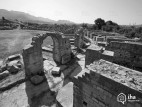
Discover Croatia's Archaeological Secrets
Discover Croatia’s rich archaeological secrets, from the well known ancient Roman city of Salona near Split or the Neanderthal museum in Krapina to the often overlooked Andautonia Archaeological Park, just outside of Zagreb, which boasts the excavated ruins of a Roman town or the oldest continuously inhabited town in Europe, Vinkovci.
panorama
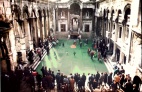

Croatian Sites on UNESCO World Heritage Tentative List
A little know fact is that Croatia, together with Spain, have the most cultural and historical heritage under the protection of UNESCO, and Croatia has the highest number of UNESCO intangible goods of any European country.
panorama
.jpg)
.jpg)
Croatian National Theatre in Zagreb
The National Theater in Zagreb, Croatia’s capital, is one of those things which always finds its way to every visitor’s busy schedule.
panorama


Zagreb's Street Art
So you're visiting Zagreb and are curious about it's underground art scene? Check out this guide to Zagreb's street art and explore all the best graffiti artists' work for yourself on your next walk through the city.
panorama

Zagreb Festivals and Cultural Events
Numerous festivals, shows and exhibitions are held annually in Zagreb. Search our what's on guide to arts & entertainment.
Authors' pages
